
2026-09-01
Rim joist insulation in Indiana basements
By Hoosier Spray Foam
Closed-cell spray foam at the band joist air-seals Indiana basements, cuts perimeter heat loss, and helps the first floor stop leaking outdoor air. Climate zone 5 guidance is at least R-20 at the rim.
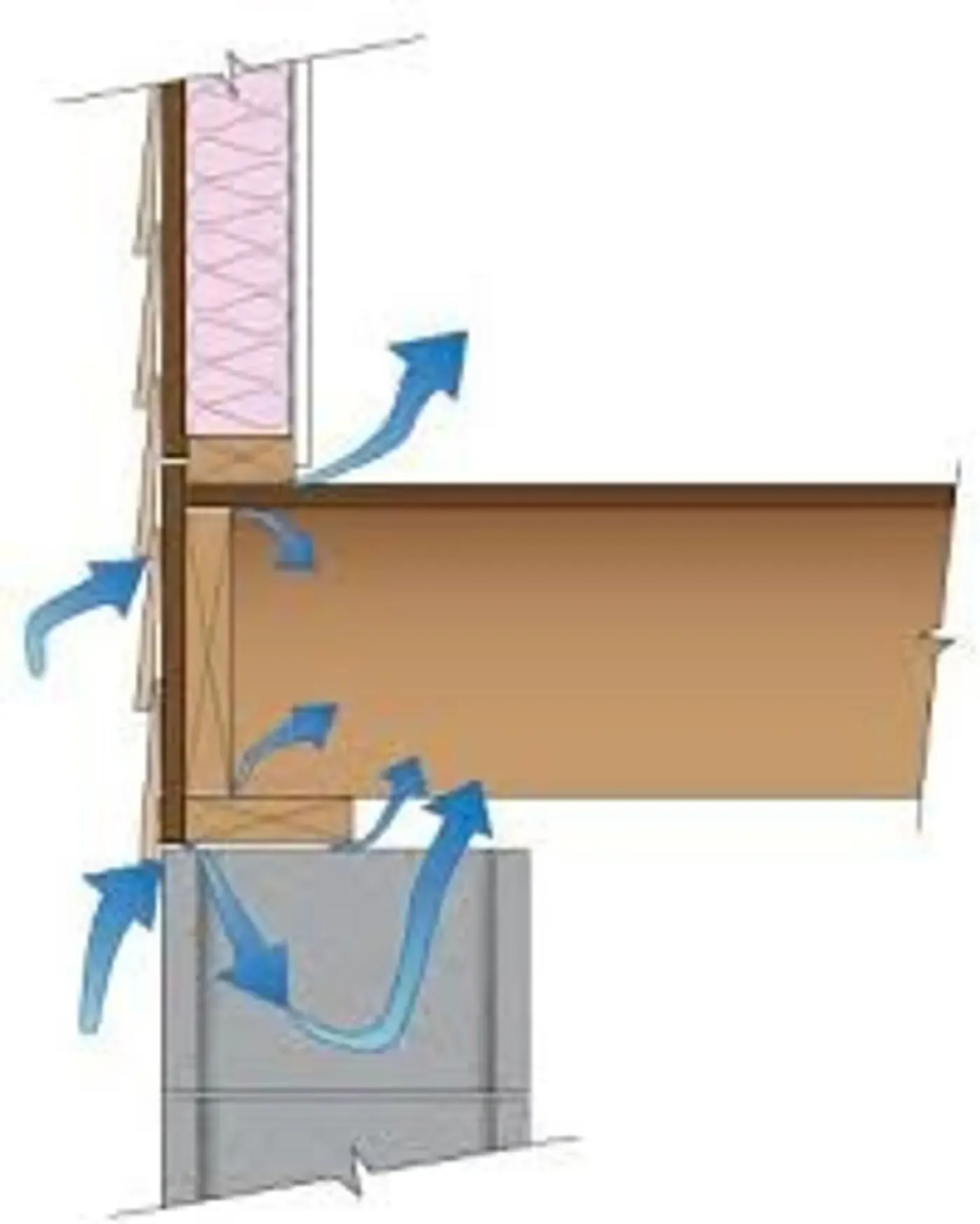
The rim joist is one of the leakiest lines in an Indiana basement. Closed-cell spray foam air-seals that band, adds R-value in a thin space, and keeps outdoor air from washing the first-floor edge. In climate zone 5 we treat the rim as at least R-20. Bare wood at the perimeter means heat is leaving.
Hoosier Spray Foam foams rims in Westfield, Carmel, Fishers, Noblesville, and Zionsville basements, and in the same detail on crawlspaces. This is foundation work, not an attic pitch. The basements page is the service overview. This article is the rim.
What is a rim joist and why does it leak?
The rim (or band) joist runs around the perimeter of the house, above the foundation wall, in contact with the sill plate and the first-floor subfloor. It is a wood box with penetrations: rims spliced at corners, holes for hose bibs and dryer vents, gaps behind the rim where the sill sits on concrete.
Those gaps connect the basement to the siding cavity and to outdoor air. In January, cold air falls into the basement and the first-floor edge gets cold. In July, humid air comes in the same path. Fiberglass stuffed in the rim bays sags, gets damp, and does not air-seal the cracks at the sill.
Closed-cell expands into those cracks. It sticks to wood and concrete. At about R-7 per inch it can reach a useful rim R-value without building a second wall. At about 1.5 inches or more it also acts as a vapor barrier in a place that sees outdoor humidity and indoor basement air.
Why does climate zone 5 call for more rim insulation?
Indiana is climate zone 5. On our basements and crawlspace pages we publish the rim guidance we use: climate zones 1–4 at least R-13, climate zones 5–8 at least R-20. That matches how we spec the band here. We are not inventing an extra code section number on top of that.
R-20 at about R-7 per inch is roughly three inches of closed-cell if the foam is the only insulation in the bay. Some rims are shallow. Some already have a little foam or a sill gasket. We measure the bay and the leaks, then spec thickness so the rim is sealed and in the R-20 conversation — not so a board-foot number looks large on paper.
How is rim foam connected to ice dams and first-floor heat loss?
Ice dams form when heat escaping at the roof edge melts snow, which refreezes at the cold eave. The rim is not the roof. It is one of the places heat and air leave the conditioned box and warm surfaces they should not warm.
A leaky rim lets basement and first-floor air out at the band. That air can work into the walls and toward the eaves. Air-sealing the rim will not, by itself, fix a roof that has other bypasses. It is still one of the highest-value air-seal lines in a Hamilton County house, and it is the line we can see and foam from the basement without opening the roof.
If the main complaint is cold floors over a crawl, the rim is part of encapsulation. If the main complaint is a cold basement and a drafty first floor, start at the band and decide whether basement walls also get foam. Crawlspace vs basement helps pick the path.
Should the basement walls be foamed at the same time?
Often yes, not always. Basement walls can account for a large share of heat loss because they are big, cool surfaces. Closed-cell thicker than 1.5 inches creates a vapor barrier on those walls so the space stays drier and the dehumidifier or A/C runs less.
A house with a finished basement, furred walls, and an open rim may only need the rim. A house with bare block and an open rim usually needs both. We do not foam over a moisture problem that is still liquid water. Bulk leaks get fixed first.
Open-cell is the wrong product on the rim and on below-grade walls for the same reasons it is wrong on exterior walls: it is vapor-open and a weak air seal compared with closed-cell in a wet, cold assembly.
What does a rim-joist job look like in a Fishers or Noblesville house?
Access is from the basement or crawl. We protect the floor, mask what needs masking, and spray each bay so foam ties the subfloor, the rim, and the sill into one air seal. Corners and penetrations take longer than a clean mid-span bay. Old fiberglass comes out first.
Homeowners should plan on:
- Clearing storage off the perimeter.
- Pointing out knob-and-tube, leaks, or prior foam.
- Venting and occupancy rules the day of the spray (we will tell you the re-entry window for the product we use).
Photos of finished rims are on Our Work. Cost follows board feet, access, and whether walls are in the same trip. See spray foam cost.
Can I foam the rim myself with a kit?
Rim bays look small. Kits still go off-ratio, under-yield, and miss the sill crack — the leak that mattered. A bad rim job is hard to remove from wood and concrete. Hiring a contractor covers why kits fail and what to ask us instead.
Next step
Call 317.210.2931 or request an estimate. Weekdays 8am–5pm, 15001 Shelborne Road, Westfield.
Ready for a local look at your building?
Call 317.210.2931 or request an estimate. Weekdays 8am–5pm, 15001 Shelborne Road, Westfield, IN 46074.