
2026-09-28
Air sealing vs R-value in climate zone 5 Indiana
By Hoosier Spray Foam
Labeled R-value ignores air leaks. How air sealing and insulation work together in climate zone 5 Indiana homes, rims, crawlspaces, and pole barns.
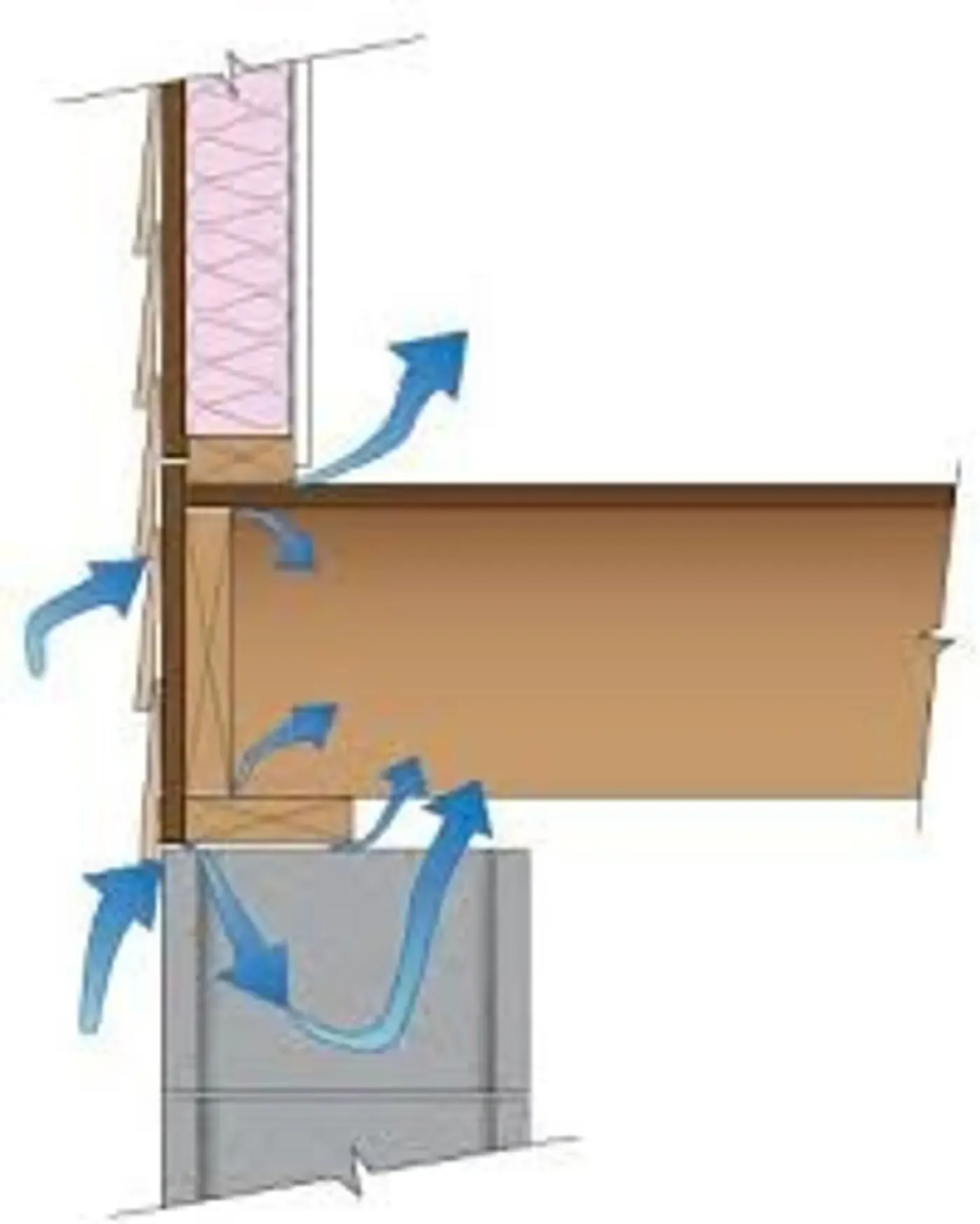
R-value measures how well a material resists conductive heat flow. It does not measure air leakage. In Central Indiana (climate zone 5), cold winters and humid summers punish both, and a high bag R can still disappoint if outdoor air moves freely through gaps, cracks, and unfinished edges.
Hoosier Spray Foam is at 15001 Shelborne Road in Westfield. We install closed-cell and open-cell spray foam for homes and buildings around Carmel, Fishers, Noblesville, Zionsville, and the rest of Hamilton County and Central Indiana. This guide explains air sealing versus labeled R-value in plain language.
What R-value does, and what it skips
R-value is a conduction number. It answers one question: if heat tries to move through the solid material itself, how hard is that path?
It does not tell you whether outdoor air slips past the insulation through a sill crack, an electrical bay, a rim edge, or a metal seam. Air that moves carries heat with it. In winter it also carries indoor moisture toward cold surfaces, where condensation can form.
So you can install a high-R product and still feel a cold first floor, a drafty basement edge, or a sweating pole barn roof if the air plane is open. That isn't "bad R." It's a different physical path.
For labeled R-value of batts versus foam, see batt insulation vs spray foam R-value in Indiana. For heat that conducts through studs and steel, see thermal bridging in climate zone 5 Indiana.
Why climate zone 5 makes air leaks expensive
Climate zone 5 has a large winter temperature swing. Warm indoor air wants to leave, and cold outdoor air wants to enter. The stack effect pulls air up through the house when the crawl, rim, or basement edge is open to the outdoors.
Humidity matters too. Winter indoor air often holds more moisture than outdoor air, and if it reaches cold sheathing, rim wood, or metal, it can condense. Air sealing is part of moisture control, not only comfort. In summer, leaky shells make cooling work harder and push humid outdoor air into cool cavities.
Where air leaks show up in Central Indiana buildings
Rim joists and the sill. Batts stuffed in the bay often leave the sill crack and the wood-to-concrete edge open. Closed-cell at the rim air-seals that plane and adds R in a tight space. Zone 5 guidance commonly treats the rim as about R-20. See rim joist insulation in Indiana basements and basements.
Crawlspaces. Vented or leaky crawls feed the stack effect. Encapsulation, sealed vapor barriers, and foam at walls and rims cut both air and moisture paths. See crawlspace encapsulation and crawlspace encapsulation in Central Indiana.
Wood-frame walls. Batts don't seal by themselves. Gaps at boxes, plates, and wiring create air loops the label never counted. Spray foam that contacts the framing can close those paths, but the foam type has to match the assembly, and open-cell is not our exterior-wall foam in Indiana. See why open-cell should not go on Indiana exterior walls and closed-cell vs open-cell.
Pole barns and metal buildings. Metal seams and fasteners are air and condensation paths. Closed-cell bonded to the steel seals and insulates the skin. See pole barns, closed-cell R-value for Indiana pole barns, and pole barn spray foam in rural Indiana.
Attic bypasses. Recessed lights, chases, and top plates can leak even when the attic floor looks well insulated. The building-science order is to seal the air plane first and then add fill. Blown-in vs spray foam covers when loose-fill fits after the leaks are closed.
How closed-cell spray foam ties R and air sealing together
Correctly installed closed-cell foam expands to contact wood, concrete, or steel. That contact can air-seal the surface while adding about R-6.5 to R-7 per inch. At roughly 1.5 inches or more it can also act as a vapor retarder, which matters for Indiana exterior walls.
That combination is why closed-cell shows up on rims, crawl edges, basement walls, pole barn metal, and exterior walls here. You're buying a continuous sealed layer where the assembly needs one, not only inches of R.
Open-cell can air-seal some interior or specially designed assemblies at a lower R per inch, but it lets vapor through and is not the foam we use on exterior walls in climate zone 5. Batts and blown-in still have a place when the air barrier is handled separately, such as after rim sealing or as attic-floor fill after bypasses are closed.
How to choose: add R, or close the leaks first?
Ask three questions before buying more R:
- Where is outdoor air entering this assembly: the sill, rim, vents, metal seams, or boxes?
- Is the insulation continuous and in contact, or are there gaps?
- Is moisture controlled for zone 5, especially on exterior walls and metal?
If air paths are open, adding thicker fill in the middle of the bay often underdelivers. Seal the plane, then match the product and thickness to the assembly.
Summary
In climate zone 5 Indiana, labeled R-value and air sealing answer different questions. R-value measures resistance to heat moving through the material. Air sealing stops moving air from carrying heat and moisture around it. Closed-cell spray foam helps most where it does both, on rims, crawl edges, basement walls, exterior walls, and pole barn metal.
Next step
Call 317.210.2931 or request an estimate. Weekdays 8am to 5pm, 15001 Shelborne Road, Westfield, IN 46074.
Ready for a local look at your building?
Call 317.210.2931 or request an estimate. Weekdays 8am–5pm, 15001 Shelborne Road, Westfield, IN 46074.